background img

The New Stuff

Showing posts with label app-program. Show all posts
Where the heck are my keys? WSJ Personal Tech Columnist 

Joanna Stern finds out which lost item tracker is the best. Photo/Video: Drew Evans/The Wall Street Journal
A quantitative analysis of my life would probably reveal that I spend three whole days a year searching for lost belongings. If I'm not looking for my keys, it's my work ID, wallet or glasses.
Where tricks for the absent-minded fail me, technology is ensuring I never lose anything again. Or at least that's a promise of the so-called Internet of Things: As more objects get low-powered wireless chips, they'll be in constant communication with each other—and our phones.
But heck if I'm going to wait for Marc Jacobs or Coach to embed wireless chips into their accessories. Instead, I tested Bluetooth tags that attach to my wallet, keychain, work ID and purse, and pair with my smartphone so I can keep tabs on them. Of course, that means I better not lose my phone.
Phone Halo's TrackR, Protag's Duet and Tile's tracking devices cost less than $25, are easy to set up, and are no bigger than a poker chip, so they don't really get in the way. All three resulted from successful crowdfunding campaigns. Apparently I'm not the only forgetful technophile out there. However, some work better than others in particular situations or locations. Tile and TrackR can leverage a community of users to find what's lost, but they're only as good as the number of people using the app.
Duet (orange), Tile (white) and Trackr (black) are connected to the Internet so you can find items, such as your keys, when they're lost. Drew Evans/The Wall Street Journal
At Close Range
These trackers work best when you've misplaced your items in close proximity, which is usually the case for me. (Yes, my glasses are often right on my head.)
When the trackers are in range of your phone's Bluetooth radio (100 to 150 feet), the app's proximity meter indicates how close your keys or wallet may be. Tile gives you text clues ("It's about an arm's length away") while TrackR and Duet show wireless signal strength.
Duet and TrackR let you set alarms that sound off on the phone and the tracker when the two are no longer connected. That is, when you've walked away from your precious belonging. TrackR's iPhone and Android apps even let you configure a song to play if the alarm is triggered. I chose the Righteous Brothers' "You've Lost That Loving Feeling."
But even if you never again lose your keys, you may lose your mind with this feature. Anytime I stepped out of range—taking the garbage out, charging my phone in another room—the sensor on my keys tripped, and alarms (and that song) began blaring. TrackR says it's working on smarter sensing that can automatically disable alerts if you're still in the area. TrackR sometimes sounded off when a tag's Bluetooth connection failed. At this point, I'll be happy if I never hear Tom Cruise's famous pickup song again.
The alarms were extremely helpful when locating stuff in the bottomless vortex that is my big, multi-pocketed purse, however. All three apps let you sound an alarm manually to guide you to a misplaced item. Tile's loud, melodious tones were the easiest to hear at a distance, even beneath all the rubble in my bag.
Widening the Search
Because these tags rely on Bluetooth and don't have GPS or cellular Internet connections, they need a phone to determine their geographic location.
The upside is that the trackers are small and have batteries that last a year. (Duet and TrackR's are replaceable; Tile charges $20 for a replacement tag when it runs out of juice.) But the downside is that if I drop my keys on the street or in the back of a taxi, I'm pretty much out of luck, unless a kind stranger finds them and tracks me down.
While the apps report the last time the phone was in touch with the tracker, the map pins aren't accurate enough to be helpful. TrackR didn't always update a tag's location until I opened the app, either. Once, when my house keys were in the trunk of my car in New Jersey, the map insisted they were 23 miles away in Manhattan.
The Wall Street Journal
Phone Halo, which makes TrackR, says the issues I am experiencing could be related to the way the iPhone handles Bluetooth signals in the background. "We're working to maximize reliability," says the company CEO, Chris Herbert.
Duet's map got confused once when the tracker wasn't connected, pointing to a spot off the west coast of Africa, where neither I, nor my keys, have ever been. The company plans to fix the bug soon.
Tile and TrackR have other ways to find your stuff—ones that could one day create a massive crowdsourced lost-and-found radar. Any phones with their apps installed can quietly report the whereabouts of your tagged items to you. For now, it's unlikely someone sitting next to you on the train has these apps, but it may help if you can convince your friends or family to download the apps and sign up for the service.
Instead of texting my colleague who sits next to me to ask if I had left my ID at my desk, I asked him to install the Tile and TrackR apps on his phone. Without any involvement from him—or even his knowledge—I was able to see on my phone's map that my ID was in fact "last seen at 9:10 a.m." at my office. His phone pinpointed its location.
Tile's crowd-finding feature consistently worked better than TrackR's. My colleague often had to launch the TrackR app near my keys or ID to locate them, while the Tile seamlessly identified them. Duet plans to add a crowd-searching feature to its app this summer.
Overall, Tile was better designed and more reliable than the others, calmly keeping watch and pointing me toward my misplaced stuff when it went astray. Unfortunately, Tile only works on iPhones, and, due to a limited initial production run, it won't ship to new customers until this fall.
If you can't wait, the $25 TrackR is your best option, especially if you're on Android. But heed my warning about proximity alerts and alleged map pinpoints.
Yes, these trackers are still finding themselves, but if along the way they can save me from wasting time in my daily frenzy, they seem worth the minimal investment.


Apps to Find Lost Things

Where the heck are my keys? WSJ Personal Tech Columnist 

Joanna Stern finds out which lost item tracker is the best. Photo/Video: Drew Evans/The Wall Street Journal
A quantitative analysis of my life would probably reveal that I spend three whole days a year searching for lost belongings. If I'm not looking for my keys, it's my work ID, wallet or glasses.
Where tricks for the absent-minded fail me, technology is ensuring I never lose anything again. Or at least that's a promise of the so-called Internet of Things: As more objects get low-powered wireless chips, they'll be in constant communication with each other—and our phones.
But heck if I'm going to wait for Marc Jacobs or Coach to embed wireless chips into their accessories. Instead, I tested Bluetooth tags that attach to my wallet, keychain, work ID and purse, and pair with my smartphone so I can keep tabs on them. Of course, that means I better not lose my phone.
Phone Halo's TrackR, Protag's Duet and Tile's tracking devices cost less than $25, are easy to set up, and are no bigger than a poker chip, so they don't really get in the way. All three resulted from successful crowdfunding campaigns. Apparently I'm not the only forgetful technophile out there. However, some work better than others in particular situations or locations. Tile and TrackR can leverage a community of users to find what's lost, but they're only as good as the number of people using the app.
Duet (orange), Tile (white) and Trackr (black) are connected to the Internet so you can find items, such as your keys, when they're lost. Drew Evans/The Wall Street Journal
At Close Range
These trackers work best when you've misplaced your items in close proximity, which is usually the case for me. (Yes, my glasses are often right on my head.)
When the trackers are in range of your phone's Bluetooth radio (100 to 150 feet), the app's proximity meter indicates how close your keys or wallet may be. Tile gives you text clues ("It's about an arm's length away") while TrackR and Duet show wireless signal strength.
Duet and TrackR let you set alarms that sound off on the phone and the tracker when the two are no longer connected. That is, when you've walked away from your precious belonging. TrackR's iPhone and Android apps even let you configure a song to play if the alarm is triggered. I chose the Righteous Brothers' "You've Lost That Loving Feeling."
But even if you never again lose your keys, you may lose your mind with this feature. Anytime I stepped out of range—taking the garbage out, charging my phone in another room—the sensor on my keys tripped, and alarms (and that song) began blaring. TrackR says it's working on smarter sensing that can automatically disable alerts if you're still in the area. TrackR sometimes sounded off when a tag's Bluetooth connection failed. At this point, I'll be happy if I never hear Tom Cruise's famous pickup song again.
The alarms were extremely helpful when locating stuff in the bottomless vortex that is my big, multi-pocketed purse, however. All three apps let you sound an alarm manually to guide you to a misplaced item. Tile's loud, melodious tones were the easiest to hear at a distance, even beneath all the rubble in my bag.
Widening the Search
Because these tags rely on Bluetooth and don't have GPS or cellular Internet connections, they need a phone to determine their geographic location.
The upside is that the trackers are small and have batteries that last a year. (Duet and TrackR's are replaceable; Tile charges $20 for a replacement tag when it runs out of juice.) But the downside is that if I drop my keys on the street or in the back of a taxi, I'm pretty much out of luck, unless a kind stranger finds them and tracks me down.
While the apps report the last time the phone was in touch with the tracker, the map pins aren't accurate enough to be helpful. TrackR didn't always update a tag's location until I opened the app, either. Once, when my house keys were in the trunk of my car in New Jersey, the map insisted they were 23 miles away in Manhattan.
The Wall Street Journal
Phone Halo, which makes TrackR, says the issues I am experiencing could be related to the way the iPhone handles Bluetooth signals in the background. "We're working to maximize reliability," says the company CEO, Chris Herbert.
Duet's map got confused once when the tracker wasn't connected, pointing to a spot off the west coast of Africa, where neither I, nor my keys, have ever been. The company plans to fix the bug soon.
Tile and TrackR have other ways to find your stuff—ones that could one day create a massive crowdsourced lost-and-found radar. Any phones with their apps installed can quietly report the whereabouts of your tagged items to you. For now, it's unlikely someone sitting next to you on the train has these apps, but it may help if you can convince your friends or family to download the apps and sign up for the service.
Instead of texting my colleague who sits next to me to ask if I had left my ID at my desk, I asked him to install the Tile and TrackR apps on his phone. Without any involvement from him—or even his knowledge—I was able to see on my phone's map that my ID was in fact "last seen at 9:10 a.m." at my office. His phone pinpointed its location.
Tile's crowd-finding feature consistently worked better than TrackR's. My colleague often had to launch the TrackR app near my keys or ID to locate them, while the Tile seamlessly identified them. Duet plans to add a crowd-searching feature to its app this summer.
Overall, Tile was better designed and more reliable than the others, calmly keeping watch and pointing me toward my misplaced stuff when it went astray. Unfortunately, Tile only works on iPhones, and, due to a limited initial production run, it won't ship to new customers until this fall.
If you can't wait, the $25 TrackR is your best option, especially if you're on Android. But heed my warning about proximity alerts and alleged map pinpoints.
Yes, these trackers are still finding themselves, but if along the way they can save me from wasting time in my daily frenzy, they seem worth the minimal investment.


A Swedish hacker has discovered software vulnerability in Apple’s desktop operating system, while a separate researcher has discovered iPhone malware

Macs are exposed to two new vulnerabilities: wirelurker and rootpipe.Photograph: Graeme Robertson/Graeme Robertson
Users of Apple’s Mac OS X are being warned to watch out for not one, but two new weaknesses in the platform which can be used in attacks – one of which is already in the wild.
The first, known as Rootpipe, affects multiple versions of Mac OS X, including the newest release, Yosemite. It lets an attacker gain “root” control of a computer, the highest level of access, without having to know a password.
Rootpipe could theoretically allow a hacker to install any malicious software that could be used to steal credit cards details or other personal data, among other things.
The other, called Wirelurker, is the first malware seen in the wild which targets iOS devices that haven’t been jailbroken. Wirelurker could be used to extract basic personal information from a phone. It tricks the user into installing it on their Mac, and then waits until an iPhone or iPad is plugged in over USB before using the trusted relationship between the two to install software on the mobile device.
Rootpipe
Discovered by the Swedish hacker Emil Kvarnhammar, who works for security firm Truesec, Rootpipe is what’s known as a privilege escalation vulnerability. Modern operating systems employ several tiers of security, ensuring that a typical user can’t accidentally authorise software to damage their computer. The highest level of access, known as “root” access, is typically cordoned off from all but the most essential program.
Rootpipe is a vulnerability in Mac OS X which lets an attacker ignore that requirement, and access the root of the computer without needing a password. “Normally there are ‘sudo’ password requirements, which work as a barrier, so the admin cant gain root access without entering the correct password. However, rootpipe circumvents this,” Kvarnhammar told MacWorld.
If abused, the vulnerability would malware developers far greater scope to damage a user’s computer without needing to ask, or trick, them into entering a password.
The hacker has reported the vulnerability to Apple, and is withholding further information on how, exactly, to trigger it until the company rolls out a patch to affected users – refusing even to get into the source of the name, since that reveals information which could be used to replicate the attack.
In the meantime, he says the simplest way to protect a computer is to stop using an administrative account on a day-to-day basis, instead using a normal user account unless something needs administrative privileges. He also recommends using Apple’s FileVault system, which is turned on by default in Mac OS X Yosemite.
Wirelurker
Unlike Rootpipe, Wirelurker is already present in the wild, hitching a ride on certain versions of pirated Chinese software. When the user runs the pirated software, they accidentally install the malware as well.
Wirelurker then hangs around the infected system until the user plugs in a mobile device with a USB cable, at which point it scrapes personal data and attempts to install malicious copies of apps. If the user’s device is jailbroken – hacked, to let them install software without Apple’s permission – then it steals far more information, such as old iMessages and the contents of the user’s address book.
Currently, versions of the malware seen in the mild are fairly innocuous, seemingly more concerned with identifying the users of the pirated software than inflicting further harm. But the techniques used, which abuse Apple’s iDevice management systems, could open the door to much more damaging malware.
“WireLurker is unlike anything we’ve ever seen in terms of Apple iOS and OS X malware,” says Ryan Olson, the intelligence director of Palo Alto Networks, who discovered the malware. “The techniques in use suggest that bad actors are getting more sophisticated when it comes to exploiting some of the world’s best-known desktop and mobile platforms.”
For users who have made a habit of downloading pirated Chinese software, Palo Alto Networks have released a detection tool to check whether they are infected with Wirelurker.
Apple did not respond to a request for comment.
the guard

Double trouble for Apple, as two software security flaws discovered

A Swedish hacker has discovered software vulnerability in Apple’s desktop operating system, while a separate researcher has discovered iPhone malware

Macs are exposed to two new vulnerabilities: wirelurker and rootpipe.Photograph: Graeme Robertson/Graeme Robertson
Users of Apple’s Mac OS X are being warned to watch out for not one, but two new weaknesses in the platform which can be used in attacks – one of which is already in the wild.
The first, known as Rootpipe, affects multiple versions of Mac OS X, including the newest release, Yosemite. It lets an attacker gain “root” control of a computer, the highest level of access, without having to know a password.
Rootpipe could theoretically allow a hacker to install any malicious software that could be used to steal credit cards details or other personal data, among other things.
The other, called Wirelurker, is the first malware seen in the wild which targets iOS devices that haven’t been jailbroken. Wirelurker could be used to extract basic personal information from a phone. It tricks the user into installing it on their Mac, and then waits until an iPhone or iPad is plugged in over USB before using the trusted relationship between the two to install software on the mobile device.
Rootpipe
Discovered by the Swedish hacker Emil Kvarnhammar, who works for security firm Truesec, Rootpipe is what’s known as a privilege escalation vulnerability. Modern operating systems employ several tiers of security, ensuring that a typical user can’t accidentally authorise software to damage their computer. The highest level of access, known as “root” access, is typically cordoned off from all but the most essential program.
Rootpipe is a vulnerability in Mac OS X which lets an attacker ignore that requirement, and access the root of the computer without needing a password. “Normally there are ‘sudo’ password requirements, which work as a barrier, so the admin cant gain root access without entering the correct password. However, rootpipe circumvents this,” Kvarnhammar told MacWorld.
If abused, the vulnerability would malware developers far greater scope to damage a user’s computer without needing to ask, or trick, them into entering a password.
The hacker has reported the vulnerability to Apple, and is withholding further information on how, exactly, to trigger it until the company rolls out a patch to affected users – refusing even to get into the source of the name, since that reveals information which could be used to replicate the attack.
In the meantime, he says the simplest way to protect a computer is to stop using an administrative account on a day-to-day basis, instead using a normal user account unless something needs administrative privileges. He also recommends using Apple’s FileVault system, which is turned on by default in Mac OS X Yosemite.
Wirelurker
Unlike Rootpipe, Wirelurker is already present in the wild, hitching a ride on certain versions of pirated Chinese software. When the user runs the pirated software, they accidentally install the malware as well.
Wirelurker then hangs around the infected system until the user plugs in a mobile device with a USB cable, at which point it scrapes personal data and attempts to install malicious copies of apps. If the user’s device is jailbroken – hacked, to let them install software without Apple’s permission – then it steals far more information, such as old iMessages and the contents of the user’s address book.
Currently, versions of the malware seen in the mild are fairly innocuous, seemingly more concerned with identifying the users of the pirated software than inflicting further harm. But the techniques used, which abuse Apple’s iDevice management systems, could open the door to much more damaging malware.
“WireLurker is unlike anything we’ve ever seen in terms of Apple iOS and OS X malware,” says Ryan Olson, the intelligence director of Palo Alto Networks, who discovered the malware. “The techniques in use suggest that bad actors are getting more sophisticated when it comes to exploiting some of the world’s best-known desktop and mobile platforms.”
For users who have made a habit of downloading pirated Chinese software, Palo Alto Networks have released a detection tool to check whether they are infected with Wirelurker.
Apple did not respond to a request for comment.
the guard


Mobile marketing and ad tech company Fiksu announced this morning $10 million in debt funding from Silicon Valley Bank, after a year which saw it hiring 100 new employees, bringing its total headcount to 300, and seeing revenues of over $100 million. The company today claims it has 800 customers, including big-name brands like Coca-Cola, Disney, Topps, Dunkin’ Donuts and Groupon using its platform for ad targeting and related campaigns.
Founded in 2008, Fiksu previously raised $16.7 million over its prior Series A and Series B rounds from Qualcomm Ventures and Charles River Ventures, but it hadn’t taken in additional capital since 2012, according to CrunchBase.
Across its platform, Fiksu has over 2,300 apps it helps to promote through its data-driven mobile ad products which help app publishers and marketers with ad tracking, optimization, media buying, and integrations. It has information assets associated with over 3.3 billion app installs, and has tracked 4.7 trillion marketing events across 1.7 billion devices. Fiksu uses a “big data” and AI-based approach to analyzing mobile ads’ effectiveness with its “Programmatic Mobile Demand Platform,” the company says.
Fiksu’s decision to take on debt funding comes on the heels of its hiring of Kenneth Goldman as Fiksu’s first-ever CFO. Goldman was previously the CFO at Black Duck Software, and worked in the past to take companies through acquisitions and IPOs, including the Salary.com IPO. He also hails from Lodestar Corporation, Student Advantage, MediaMap and Shoplink.com.
At the time, Fiksu CEO Micah Adler touted the addition as being one of a person who had a “proven track record of driving growth in companies in rapidly changing industries.”
Mobile, of course, is certainly that. And mobile ad tech is a nascent field, which every day is making new advances. Fiksu especially understands the financials around app store marketing. Its monthly indexes track the costs associated with key marketing activities, including the cost to acquire loyal users; the cost per install; the cost per app launch, which focuses on the engagement and lifetime value of mobile users; and the app store competitive index which tracks the aggregate volume of downloads achieved by the app stores’ top 200 free apps on iOS.
The company understands not only what is happening, but also can explain why these costs rise and fall – for example, marketers may wait in a holding pattern ahead of the launch of new Apple devices, or the holidays may increase spending as marketers try to get their apps found and installed by new smartphone owners.
The company says it’s also planning to double its office space in Boston, as it continues to expand its workforce worldwide over the course of 2015. Fiksu currently has offices in San Francisco, Northampton, MA, London, Finland, Singapore, South Korea, Japan, New York, Chicago and L.A.

Mobile Marketing Company Fiksu Takes On $10M In Debt Funding From Silicon Valley Bank


Mobile marketing and ad tech company Fiksu announced this morning $10 million in debt funding from Silicon Valley Bank, after a year which saw it hiring 100 new employees, bringing its total headcount to 300, and seeing revenues of over $100 million. The company today claims it has 800 customers, including big-name brands like Coca-Cola, Disney, Topps, Dunkin’ Donuts and Groupon using its platform for ad targeting and related campaigns.
Founded in 2008, Fiksu previously raised $16.7 million over its prior Series A and Series B rounds from Qualcomm Ventures and Charles River Ventures, but it hadn’t taken in additional capital since 2012, according to CrunchBase.
Across its platform, Fiksu has over 2,300 apps it helps to promote through its data-driven mobile ad products which help app publishers and marketers with ad tracking, optimization, media buying, and integrations. It has information assets associated with over 3.3 billion app installs, and has tracked 4.7 trillion marketing events across 1.7 billion devices. Fiksu uses a “big data” and AI-based approach to analyzing mobile ads’ effectiveness with its “Programmatic Mobile Demand Platform,” the company says.
Fiksu’s decision to take on debt funding comes on the heels of its hiring of Kenneth Goldman as Fiksu’s first-ever CFO. Goldman was previously the CFO at Black Duck Software, and worked in the past to take companies through acquisitions and IPOs, including the Salary.com IPO. He also hails from Lodestar Corporation, Student Advantage, MediaMap and Shoplink.com.
At the time, Fiksu CEO Micah Adler touted the addition as being one of a person who had a “proven track record of driving growth in companies in rapidly changing industries.”
Mobile, of course, is certainly that. And mobile ad tech is a nascent field, which every day is making new advances. Fiksu especially understands the financials around app store marketing. Its monthly indexes track the costs associated with key marketing activities, including the cost to acquire loyal users; the cost per install; the cost per app launch, which focuses on the engagement and lifetime value of mobile users; and the app store competitive index which tracks the aggregate volume of downloads achieved by the app stores’ top 200 free apps on iOS.
The company understands not only what is happening, but also can explain why these costs rise and fall – for example, marketers may wait in a holding pattern ahead of the launch of new Apple devices, or the holidays may increase spending as marketers try to get their apps found and installed by new smartphone owners.
The company says it’s also planning to double its office space in Boston, as it continues to expand its workforce worldwide over the course of 2015. Fiksu currently has offices in San Francisco, Northampton, MA, London, Finland, Singapore, South Korea, Japan, New York, Chicago and L.A.


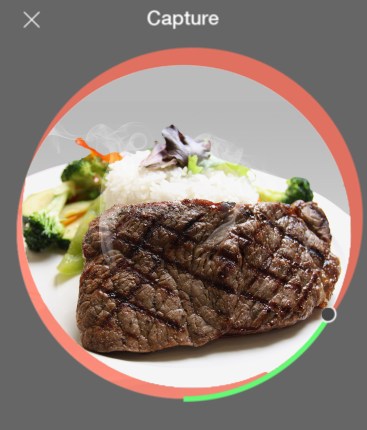
What if you could shoot those cool 360-degree, swivel-around photos you see on ecommerce sites or in The Matrix with just your smartphone? Then you’d be using the 3DAround camera app that launches next month from Dacuda, which gave TechCrunch an early peek. Simply hit record, revolve your camera phone or tablet around an object, and 3DAround stitches together all the photos into a 3D image the viewer can spin at will.
3DAroundDacuda is famous for itsPocketScan app that lets you wave your camera over a document to get a digital image of it without a bulky scanner. Now Dacuda’s 25-person team and 5 years of experience are combining to make your phone a 3D scanner that always gets the perfect angle…because it gets every angle. For starters, it’s going to add some 360-spice to a ubiquitous but often boring type of photography: food porn.
“It’s a really good time for this kind of tech because Apple just opened up the camera APIs” Dacuda founder and CTO Dr. Alexander Ilic tells me. “We need pretty low-level access to controlling exposure time, focus, and more.” That’s just what Apple allowed with iOS 8.
Illic says the inspiration for the app came from watching food blogger friends take dozens of photos of plates of grub from different angles and struggle to decide which was best. He thought “Why can’t you just go around the whole thing, so you don’t have to worry about the perfect shot with a single angle.” Originally he figured that would require a camera with expensive 3D sensors, but in fact, newer iPhones are capable if given the right software. That’s where Dacuda comes in.
Spun out of top Swiss engineering school ETH Zurich by students from the university and MIT, Dacuda’s expertise is in image stitching. It’s backed by Wellington Partners, Swiss bank Schwyzer Kantonalbank, and Austrian entrepreneur Hans-Peter Metzler.
Screen Shot 2014-10-24 at 1.05.03 PM
The 3DAround app extracts depth and structure information from a success of rapid-fire photos to create the 360-degree views. You’ll be able to interactively view the swivel-able photo through the 3DAround app or WebGL-equipped browsers like Chrome, and share some version of the images to Facebook, Twitter, and Pinterst
The app will launch for free next month on iOS 8 devices for the iPhone 5 on up. While some phones like the HTC EVO now have stereoscopic double cameras that can take slightly “3D” photos, 3DAround looks like the real deal. We’ll have hands-on coverage once the app launches, so check back to see us spinning around some delicious food.

First Look At 3D Camera App 3DAround


What if you could shoot those cool 360-degree, swivel-around photos you see on ecommerce sites or in The Matrix with just your smartphone? Then you’d be using the 3DAround camera app that launches next month from Dacuda, which gave TechCrunch an early peek. Simply hit record, revolve your camera phone or tablet around an object, and 3DAround stitches together all the photos into a 3D image the viewer can spin at will.
3DAroundDacuda is famous for itsPocketScan app that lets you wave your camera over a document to get a digital image of it without a bulky scanner. Now Dacuda’s 25-person team and 5 years of experience are combining to make your phone a 3D scanner that always gets the perfect angle…because it gets every angle. For starters, it’s going to add some 360-spice to a ubiquitous but often boring type of photography: food porn.
“It’s a really good time for this kind of tech because Apple just opened up the camera APIs” Dacuda founder and CTO Dr. Alexander Ilic tells me. “We need pretty low-level access to controlling exposure time, focus, and more.” That’s just what Apple allowed with iOS 8.
Illic says the inspiration for the app came from watching food blogger friends take dozens of photos of plates of grub from different angles and struggle to decide which was best. He thought “Why can’t you just go around the whole thing, so you don’t have to worry about the perfect shot with a single angle.” Originally he figured that would require a camera with expensive 3D sensors, but in fact, newer iPhones are capable if given the right software. That’s where Dacuda comes in.
Spun out of top Swiss engineering school ETH Zurich by students from the university and MIT, Dacuda’s expertise is in image stitching. It’s backed by Wellington Partners, Swiss bank Schwyzer Kantonalbank, and Austrian entrepreneur Hans-Peter Metzler.
Screen Shot 2014-10-24 at 1.05.03 PM
The 3DAround app extracts depth and structure information from a success of rapid-fire photos to create the 360-degree views. You’ll be able to interactively view the swivel-able photo through the 3DAround app or WebGL-equipped browsers like Chrome, and share some version of the images to Facebook, Twitter, and Pinterst
The app will launch for free next month on iOS 8 devices for the iPhone 5 on up. While some phones like the HTC EVO now have stereoscopic double cameras that can take slightly “3D” photos, 3DAround looks like the real deal. We’ll have hands-on coverage once the app launches, so check back to see us spinning around some delicious food.

Popular Posts